

Personal Spiritual Renewal
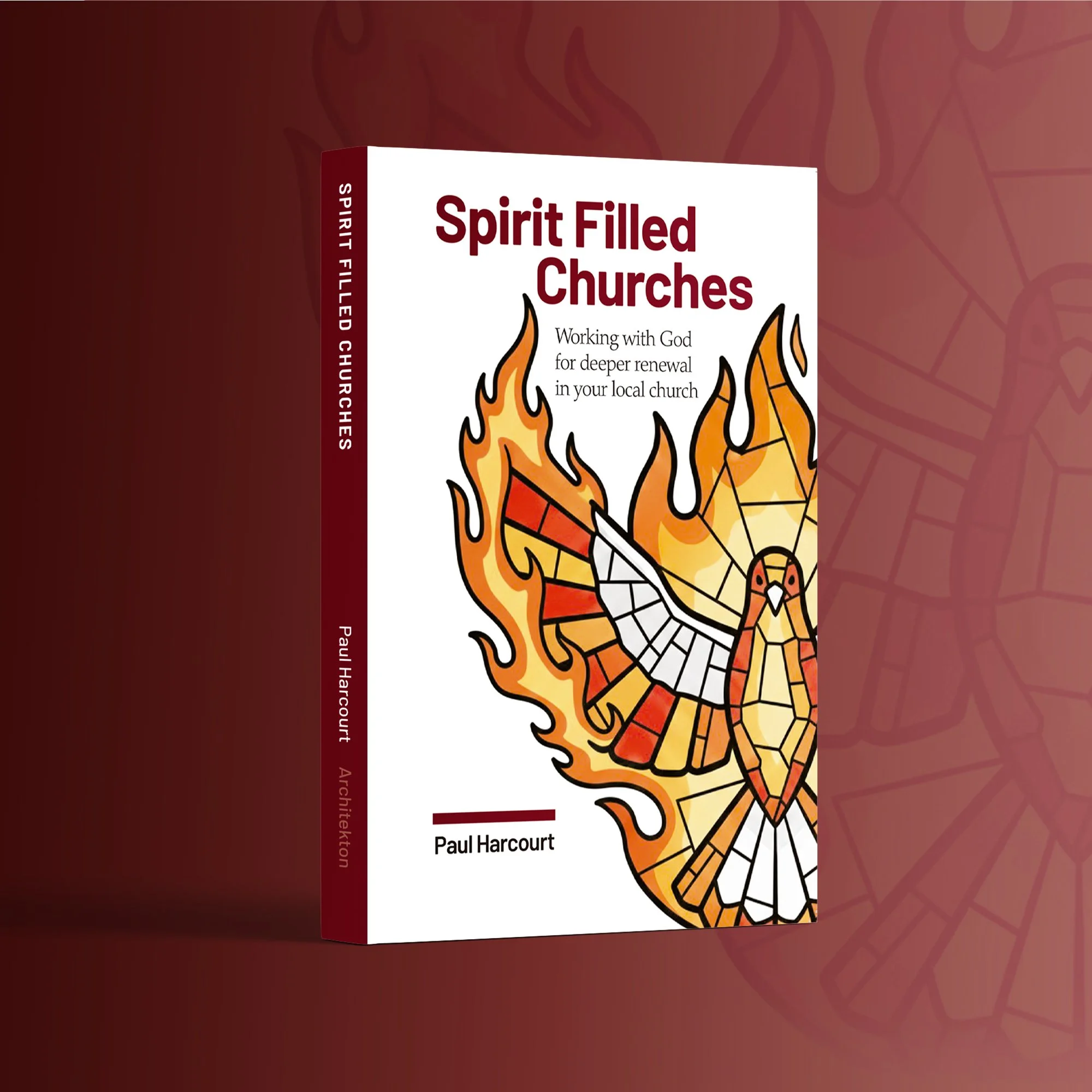
Paul Harcourt led the New Wine movement 2016-23, and has just published a new book, ‘Spirit Filled Churches: Working with God for deeper renewal in your local church’. We are also grateful for his part in the advisory group for ReSource’s charismatic history project. This is an extract from the chapter addressing personal spiritual renewal.
Another well-known Christian leader falls into public sin, is ousted by their board because of their domineering leadership, or is exposed as an abuser... We’ve seen these headlines far too often in recent years. In every sad situation, there will be many whose lives have been wrecked by the abuse of spiritual power, especially because the perpetrator was a trusted, spiritual leader. The result has been a lack of trust in the Church, even a revulsion towards the very concept of leadership.
We mustn’t forget that most ministries in God’s Church have been healthy not harmful, but we cannot ignore the mounting cries of those wounded by the misuse of power, position, and platform. In JR Woodward’s academic book, “The Scandal of Leadership”, he describes the strategies that the “principalities and powers” use to subvert God-given leadership away from Christ-centred imitation – and highlights how this is a battle with which every leader is engaged. The scandals do not simply reveal “a few bad apples” but expose how our cultures of leadership and those within them both need redeeming by the Spirit’s work.
At some points in history, charismatic renewal has been dominated by concepts of power and progress,
both of which are very evident and described as good things in the story of the early Church. Within the renewal though there has always been another note being sounded, that of inner and emotional healing, which must not be drowned out. The Spirit of God
is sounding that note again today. We don’t choose power over health, prioritising the gifts of the Spirit over the fruit.
We don’t assess our progress in Christ by any external measure, as if all that matters are “results”. Power and health in ministry are measured purely by how much Christ is formed in us. This means that, if we aspire to be truly Christian leaders, we must work on ourselves. There cannot be a long-term, healthy, apostolic or outward journey of ministry without a corresponding inward journey of healing and renewal.
A quote often attributed to the great Scottish pastor, Robert Murray M’Cheyne, puts it this way: “My people’s greatest need is my personal holiness.” As leaders, we need to be growing in our awareness of our “shadow side”,
a concept coined by the psychiatrist Carl Jung to describe what Christians would call the unredeemed aspects of our personalities. It can be a particular challenge for leaders because the
very traits that are celebrated (such
as authority, confidence, and being quick to take responsibility) can be harmful to others when not carefully managed. It is often the case that our greatest strengths become our greatest weaknesses when pushed beyond their godly limits.
As disciples, Jesus called us to “be with him and be sent by him” (Mark 3:14). We don’t get to choose. Those of us who naturally gravitate to the outward, apostolic, or missional life are always in danger of acting out of drivenness and striving. We need rhythms of rest and renewal, addressing our wounds so that they do not poison our labours. Those who are drawn to the inner life and recognise their need for emotional healing need to know that there is a call out into God’s world. If the Church is in some ways a hospital, it is more like an army field hospital where God’s soldiers and servants are lovingly restored to resume frontline service.
The Enemy knows when to attack. This is not simply when we are most vulnerable, but also when it will damage the greatest number of people. If he brings us down when we are young, normally only a few people will be significantly hurt; if he waits until we have greater influence and profile, many more people would be shaken. As we grow as leaders, the stakes get higher. It makes sense that the Enemy waits for an opportune time to bring down leaders.

Being secure in God is a pre-requisite for healthy leadership. Obviously, all of us have insecurities but we must learn not to let them undermine our leadership, especially our treatment of others. There have been many leaders who know that they are called by God but, needing to prove themselves and fearing rejection, have exercised that God-given ministry in an insecure manner.
The best thing that we can bring to those we lead is a healthy self. Time spent in the presence of God, soaking in his love for us, letting his word hold up a mirror to our lives and challenge us, allowing his Spirit to heal our wounds... these are the pathways to long-term, life-giving leadership.